
If your boiler pressure keeps falling, simply topping it up every few days isn’t a proper solution. Modern boilers use sealed heating systems that rely on stable pressure to work safely and efficiently. When the pressure drops repeatedly, it usually means there’s an underlying issue like a leak or a faulty component that needs fixing. Ignoring this can lead to poor heating performance, increased energy bills, or even damage to your boiler. It’s important to identify and address the cause rather than just repressurising the system.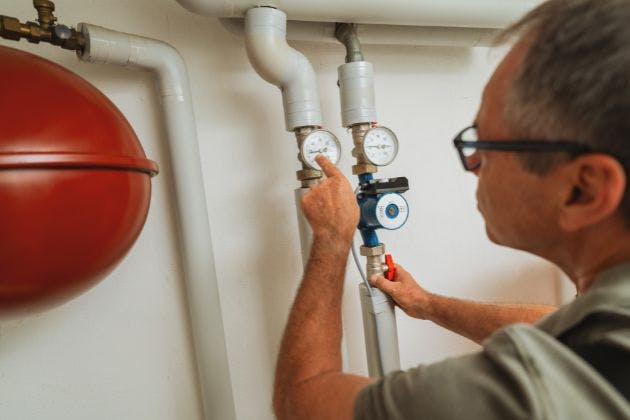
How sealed boiler systems and pressure work
Most modern combi and system boilers are sealed systems, which means the water in your radiators and pipework is contained in a closed loop. The boiler heats this same water again and again, rather than constantly taking in fresh water.
Cold, the pressure gauge on the front of the boiler is usually set around 1.0 to 1.5 bar. As the system heats up, the water expands, and the pressure rises slightly. It should stay within the green zone. If the pressure keeps dropping back towards zero, there is either a loss of water or a fault affecting how the system handles expansion.
The main reasons the boiler pressure keeps dropping
Repressurising with the filling loop can get your heating going again, but if the pressure will not stay up, something is wrong in the background. Here are the most common causes homeowners run into.
Leaks in radiators, valves or pipework
Even a slow drip from a radiator valve or a joint under the floor will let water escape and gradually drop the pressure. Sometimes leaks are obvious, with visible water, and other times you will only see staining or a slightly spongy floorboard.
If your boiler loses pressure over days rather than minutes, a small system leak is often the culprit. Left alone, it can worsen, damage floors and walls, and force the boiler to lock out more frequently.
Pressure relief valve and discharge pipe
Your boiler has a pressure relief valve (PRV) as a safety feature. If the pressure gets too high, it opens and discharges water through a copper pipe that usually terminates outside the property.
If the PRV has been lifted during a fault, or if the system regularly over-pressurises, the valve may start weeping constantly. That drip outside is water leaving your system, which will steadily pull the pressure down.
Check for damp patches around radiators, valves and visible pipework
Look at the external copper discharge pipe for signs of recent dripping
Note how fast the pressure drops after you top it up
See if the pressure climbs very high when the heating is on
Expansion vessel problems
The expansion vessel is a key component in a sealed system. It contains air or nitrogen on one side of a flexible membrane and system water on the other. This cushion of air absorbs the expansion of hot water so the pressure does not swing wildly.
If the vessel loses its air charge, or the membrane fails, there is no room for the water to expand. You may see the pressure shoot up when the heating is on, then drop back down below normal when the boiler cools and dumps excess water through the PRV.
Recently bled radiators
Bleeding radiators releases trapped air, which can improve heat output, but it also reduces system pressure. If you have bled several radiators and not topped the pressure back up correctly, the gauge may sit too low.
A one-off pressure drop straight after bleeding is usually nothing to worry about, provided it goes back to normal once you repressurise. Ongoing drops, however, point to another issue alongside any recent radiator work.
Internal boiler component faults
Less visible problems can also cause pressure loss. Faulty automatic air vents can allow water to escape along with air, while issues with internal pipework, seals or the secondary heat exchanger can cause internal leaks.
These faults are not generally suitable for DIY. They can present as pressure loss combined with repeated lockouts, strange noises or visible staining inside the boiler casing when checked by an engineer.
Simple homeowner checks before you call
You should never remove the boiler case or work on the gas supply yourself, but there are safe checks you can carry out to help narrow the problem and give your engineer useful information.
Quick visual checks around your home
Walk around your property and look at each radiator and any visible pipework. Pay attention to areas where pipes go through walls, under windows, or into wooden floors, as leaks can stain or swell surrounding materials.
Outside, find the copper discharge pipe from your boiler, usually exiting close to where the boiler is located inside. If there are fresh water marks on the wall or the end of the pipe is wet while the system is running, mention this to your engineer.
Monitor the pressure gauge and behaviour
Check the pressure when the system is completely cold, then again after the heating has been on for at least 20 to 30 minutes. Note both readings. A small rise is normal, but big swings can point towards expansion vessel or PRV problems.
If your boiler shows error or fault codes, make a note of when they appear and what the pressure gauge is doing at the same time. This pattern is extremely helpful in diagnosing intermittent issues.
Take clear photos of the pressure gauge when cold and when hot
Photograph any error codes on the boiler display
Write down how often you have to top up the pressure
Key safety guidance and when to call immediately
Any work on gas components, internal boiler parts or the boiler casing must be done by a Gas Safe registered engineer. You should not attempt to repair leaks inside the boiler or cap off any safety discharge pipes yourself.
Call for urgent help straight away if you notice any of the following:
Water leaking near electrical fittings, sockets or the boiler controls
Any signs of gas smells or hissing from pipework or the meter
The boiler locking out repeatedly with loud banging or kettling noises
If you suspect a gas leak, switch off the gas at the meter if safe to do so, open windows and doors, avoid electrical switches and call the National Gas Emergency number immediately.
What an engineer will usually check next
During a diagnostic visit for recurring pressure loss, a heating engineer will normally start by checking the gauge, system design and your recent top-up history. They may then inspect visible pipework, radiators and valves for signs of leaks.
Inside the boiler, they can test the expansion vessel charge, examine the PRV and discharge route, and look for internal leaks or faulty air vents. Depending on the findings, they might recommend repairs, replacement parts or system alterations to stabilise the pressure.
Regular servicing helps pick up small leaks, weak expansion vessels and safety valve issues before they cause repeated breakdowns. Keeping an eye on your pressure gauge and acting early often means a quicker, more cost-effective repair.
Next steps and how Greenflame Plumbing and Heating can help
If your boiler pressure keeps dropping despite regular topping up, it is time to get to the root cause rather than relying on the filling loop. Use the checks above, gather photos and notes, and avoid overfilling the system in the meantime.
For expert diagnosis and repair, contact Greenflame Plumbing and Heating on 07971651849 to book a boiler repair visit. Ask about ongoing boiler servicing and maintenance so future issues are caught earlier, and refer to your boiler repressurising guide for step-by-step top-up instructions alongside professional support.
EndFragment